Rethinking Learning Spaces
Last week we introduced the Horizons Report (
see original post). Our first post in this series will deal with rethinking learning spaces.
Learning spaces is a "hot topic" in the educational world today. To get a full understanding of what a learning space is and should look like, peek into almost any early elementary classroom. There are spaces for reading, art, small group, large group, collaboration, etc... As students progress through school, these learning spaces gradually move into spaces of desks in rows or clusters. Once in college, the space becomes a large lecture hall. Why is this? Is this best for kids?
Why can't all learning spaces look like the kindergarten classroom? There are multiple places to learn and multiple ways for students to show what they know. As teachers we choose what our learning spaces look like. If all desks were taken out of a classroom, and a teacher could design their learning spaces without the desks, what would the space look like? How would it change instruction? Would learning look different? The very first line about learning spaces in the Horizons Report says, "New ways of teaching and learning require new spaces for teaching and learning".
Looking at some of the most successful companies in the world (Google and Apple), their workers are not sitting in rows creating an assembly line product. Their learning spaces are large open areas where people are encouraged to collaborate and learn. Google even has napping pods!

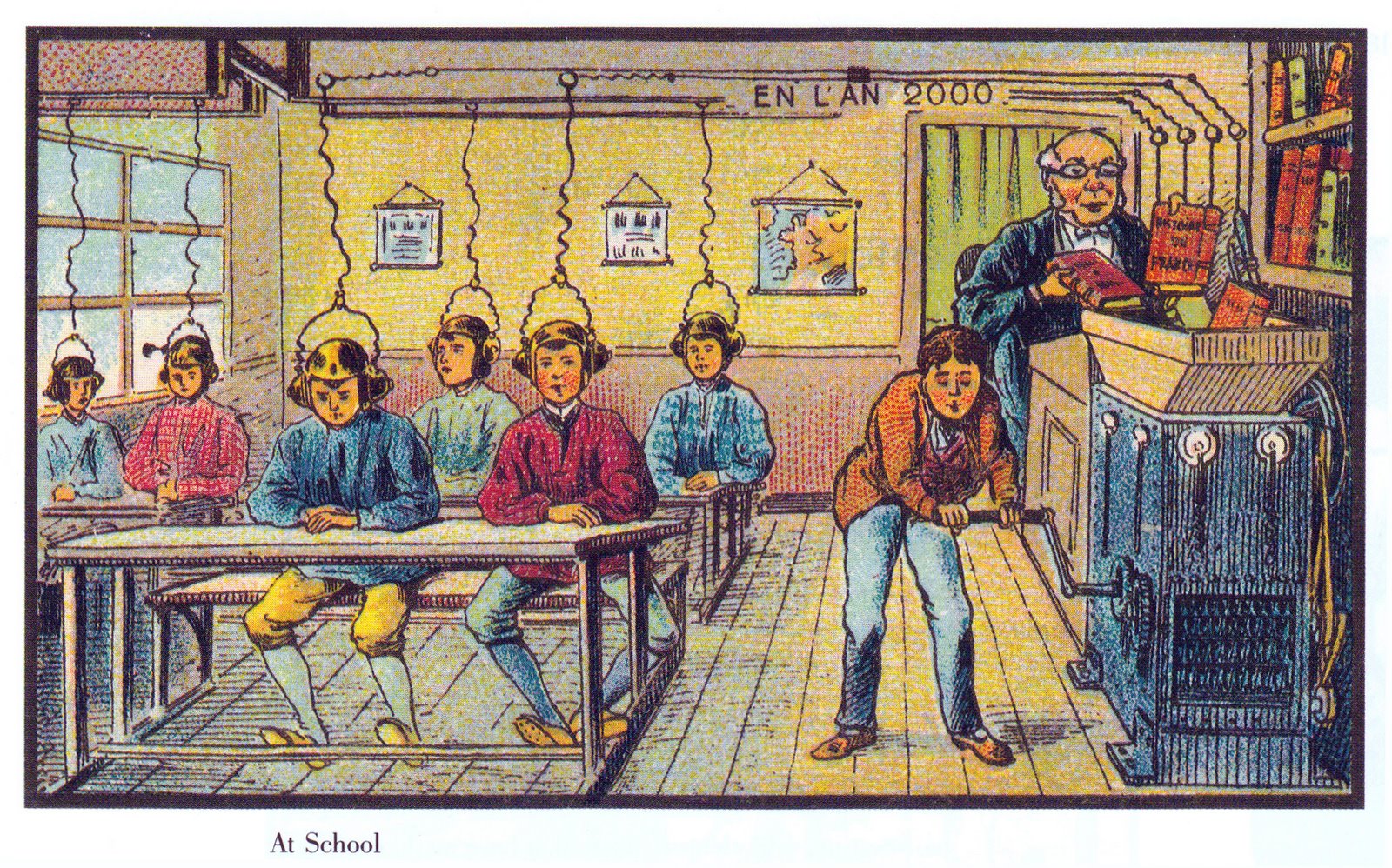
Why are we confined by rows? Does this replicate a real world work environment? To me, rows represent assembly line learning. If we want to get to a more personalized learning environment, we must first look at our learning spaces. If our spaces aren't conducive to personalized learning, then we will never get to the point of personalized learning.
Think about all the different things you have in your classroom and different activities kids are doing. Now think about your learning space. Has it changed in the past 10 years? Has it changed in the last 5 years? What if you took all your desks and tables out, what could your space look like? Can all classrooms replicate the kindergarten classroom? I don't think you have to be as bold and totally redefine your learning space, but what can you do tomorrow to make your space more conducive to learning?